College GPA can affect scholarships, internships, graduate school admissions, and even job opportunities. The good news is that improving your GPA is possible faster than most students think — if you use the right strategy.
Many students waste time studying harder instead of studying smarter. In 2026, successful students are using AI tools, active learning systems, better scheduling, and GPA optimization strategies to improve grades quickly without burning out.
This guide explains exactly how to raise your GPA fast in college using realistic and proven methods.
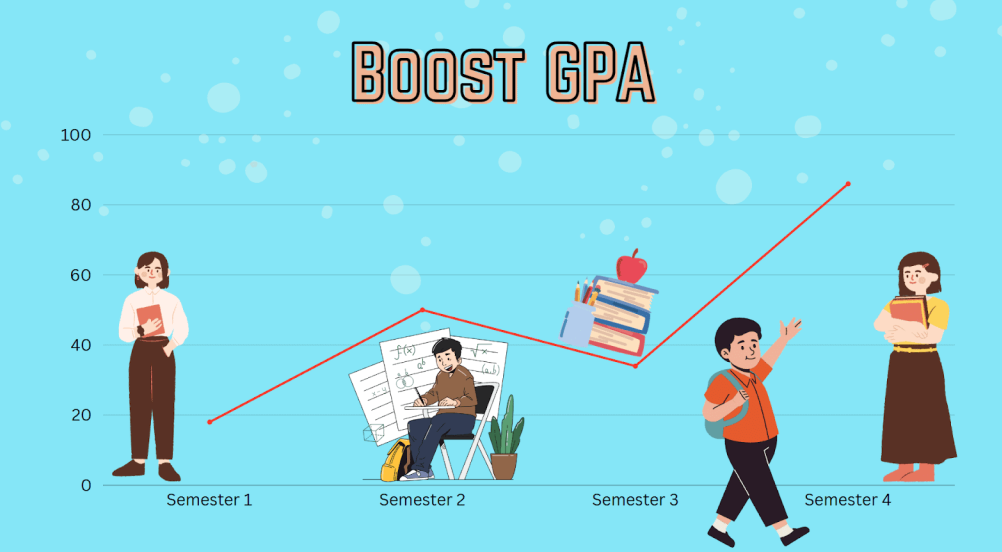
Why Your GPA Matters More Than Ever in 2026
In today’s competitive academic environment, GPA is still one of the biggest indicators of consistency and discipline.
A higher GPA can help you:
- Get internships faster
- Qualify for scholarships
- Transfer to better universities
- Improve graduate school chances
- Build confidence academically
- Increase opportunities for campus jobs and leadership programs
Even companies that focus more on skills still use GPA as an initial filter for fresh graduates.
The important thing to remember: a low GPA is not permanent.
1. Calculate Exactly What GPA You Need
Before trying random study methods, calculate your target GPA.
Ask yourself:
- What is your current GPA?
- What GPA do you want?
- How many semesters are left?
- Which courses carry the most credit hours?
Focus first on high-credit courses because they affect GPA the most.
For example:
- A 4-credit science course impacts GPA more than a 1-credit elective.
- Improving a “D” to a “B” changes GPA more dramatically than improving a “B+” to an “A”.
This helps you prioritize efficiently.
2. Stop Passive Studying Immediately
One of the biggest GPA killers is passive studying.
Passive studying includes:
- Re-reading notes repeatedly
- Highlighting entire textbooks
- Watching lectures without practice
- Memorizing without testing yourself
Instead, use active recall.
Active recall means forcing your brain to retrieve information without looking at notes.
Examples:
- Practice quizzes
- Flashcards
- Teaching concepts aloud
- Writing summaries from memory
Research consistently shows active recall improves retention far faster than passive review.
3. Use the 80/20 GPA Strategy
Not every assignment affects your grade equally.
The smartest students focus on:
- Exams
- Major projects
- High-weight quizzes
- Participation grades
Many students spend hours perfecting low-value homework while ignoring midterm preparation.
Check your syllabus carefully and identify:
- Assignments worth 20% or more
- Classes with curved grading
- Easy participation points
This is one of the fastest ways to raise GPA without studying all day.
4. Attend Every Class — Seriously
Skipping lectures is one of the fastest ways to damage GPA.
Students who attend class regularly:
- Understand professor expectations better
- Catch exam hints
- Get participation marks
- Stay academically consistent
In 2026, many professors also track attendance digitally.
Even if lecture slides are online, attending class often provides:
- Extra explanations
- Important announcements
- Exam clues not written in notes
Showing up consistently alone can noticeably improve grades.
5. Use AI Tools the Right Way
AI has completely changed studying in college.
But students using AI incorrectly often perform worse.
Good uses of AI:
- Summarizing difficult topics
- Creating practice questions
- Explaining concepts simply
- Building study schedules
- Generating flashcards
- Practicing essay structures
Bad uses:
- Copy-pasting assignments
- Letting AI write everything
- Avoiding actual learning
Professors increasingly detect low-effort AI submissions in 2026.
The smartest students use AI as a tutor, not as a replacement for studying.
6. Improve Your Sleep to Improve GPA
Most students underestimate sleep.
Poor sleep reduces:
- Memory retention
- Focus
- Exam performance
- Problem-solving ability
Students pulling all-nighters often perform worse than students who sleep properly.
For faster GPA improvement:
- Sleep 7–8 hours consistently
- Avoid studying until sunrise
- Review difficult material before sleep
- Limit phone scrolling at night
Good sleep directly improves learning speed.
7. Fix Your Study Environment
Your environment affects concentration more than motivation.
A poor study setup includes:
- Loud background noise
- Constant phone notifications
- Studying on bed
- Multitasking with social media
Instead:
- Use a quiet desk
- Turn on focus mode
- Study in library zones
- Use noise-canceling headphones if needed
Even small changes can dramatically improve study efficiency.
8. Learn How Your Professor Grades
Every professor grades differently.
Some focus on:
- Attendance
- Participation
- Detailed answers
- Concise responses
- APA/MLA formatting
- Critical thinking
Read feedback carefully.
If a professor repeatedly mentions:
- Lack of analysis
- Weak citations
- Poor structure
- Missing examples
Fixing those issues can improve grades quickly.
Students who adapt to professor expectations usually raise GPA faster than students who simply study more.
9. Take Advantage of Office Hours
Many students ignore office hours because they feel nervous.
That is a mistake.
Professors often help students who:
- Ask thoughtful questions
- Show effort
- Seek clarification early
Office hours can help you:
- Understand difficult topics
- Learn exam expectations
- Improve assignments before submission
- Build academic relationships
Sometimes professors even give subtle hints about future exams or important concepts.
10. Use the Pomodoro Technique
Long study sessions often reduce efficiency.
The Pomodoro technique works well because it prevents mental fatigue.
Popular method:
- Study for 25–50 minutes
- Take a 5–10 minute break
- Repeat
Benefits:
- Better focus
- Less burnout
- Higher productivity
- Improved consistency
Consistency matters more than occasional marathon study sessions.
11. Raise Grades Fast With Assignment Recovery
If your professor allows revisions or extra credit, take advantage immediately.
Students often ignore:
- Bonus assignments
- Attendance recovery
- Optional projects
- Discussion boards
Even small grade boosts can significantly affect GPA over multiple courses.
Always ask politely if there are opportunities to improve grades.
Some professors appreciate initiative.
12. Build a Weekly GPA Recovery Schedule
Random studying rarely works.
Create a weekly system.
Example:
Monday–Friday
- Review lecture notes daily
- Complete assignments early
- Practice active recall
- Spend extra time on weakest subject
Weekend
- Prepare for next week
- Review difficult topics
- Organize deadlines
- Practice exam questions
Students who plan weekly usually experience less stress and better academic performance.
13. Focus on Your Weakest Subjects First
Many students spend more time on subjects they already enjoy.
Instead:
- Identify your lowest-performing class
- Allocate extra study time there
- Get tutoring if necessary
Improving one failing course often raises GPA faster than improving multiple strong courses slightly.
14. Use Campus Resources
Most colleges provide free academic support.
Examples:
- Tutoring centers
- Writing labs
- Peer mentors
- Study workshops
- Academic advisors
Students paying tuition but ignoring these resources miss valuable opportunities.
Tutoring especially helps with:
- Math
- Science
- Writing-intensive courses
- Statistics
15. Avoid GPA-Destroying Habits
Some habits quietly ruin academic performance.
Common GPA killers:
- Procrastination
- Missing deadlines
- Overworking part-time jobs
- Excessive gaming
- Phone addiction
- Poor attendance
- Cramming before exams
Even reducing these habits slightly can improve grades noticeably.
16. Choose Future Classes Strategically
If possible:
- Balance difficult and easier courses
- Avoid overloaded semesters
- Research professors beforehand
- Check grading patterns
Websites, student communities, and campus groups often discuss:
- Tough graders
- Manageable workloads
- Helpful professors
Smart scheduling prevents GPA crashes.
17. Learn Test-Taking Strategy
Studying alone is not enough.
You also need strong exam strategy.
Tips:
- Read instructions carefully
- Answer easy questions first
- Manage time aggressively
- Avoid spending too long on one problem
- Review answers before submitting
For essays:
- Use clear structure
- Include evidence/examples
- Answer the actual prompt
Many students lose marks due to poor exam technique, not lack of knowledge.
18. Stay Consistent Instead of Perfect
Perfectionism often harms GPA.
Students aiming for “perfect study sessions” sometimes procrastinate entirely.
Instead:
- Study consistently
- Submit assignments on time
- Improve gradually
- Maintain momentum
Small daily improvements compound over semesters.
19. Can You Raise GPA in One Semester?
Yes — especially if:
- Your current GPA is low
- You improve failing grades
- You retake courses
- You optimize study habits quickly
Some students raise GPA dramatically within one or two semesters by becoming more organized and strategic.
The earlier you start, the better the long-term impact.
20. Best Daily Routine for Raising GPA Fast
Here’s a simple routine that works well for many college students:
Morning
- Attend classes
- Review notes briefly after lectures
Afternoon
- Complete assignments early
- Use active recall methods
Evening
- Focus on difficult subjects
- Practice quizzes or flashcards
Night
- Prepare tomorrow’s schedule
- Sleep on time
Consistency matters more than intensity.
Final Thoughts
Raising your GPA fast in college is absolutely possible, even if you struggled previously.
The biggest difference between students who improve quickly and those who stay stuck is strategy.
Focus on:
- Active learning
- Time management
- Attendance
- Smart prioritization
- Better sleep
- Consistency
You do not need to study 16 hours a day.
You need systems that actually work.
Start with small improvements this week, and your GPA can begin rising sooner than you expect.