The Ultimate Guide to Using a Cumulative GPA Calculator by Semester
Maintaining a high Grade Point Average (GPA) is a cornerstone of academic success, whether you are navigating high school or grinding through a rigorous university program. However, calculating your progress can become complicated as you accumulate more credits and varying grades across different terms.
A Cumulative GPA Calculator by Semester is an essential tool for students who want to track their academic standing over time, plan for future semesters, and ensure they meet the requirements for graduation, scholarships, or honors.
Understanding the Basics: What is a Cumulative GPA?
Before diving into the mechanics of a calculator, it is vital to distinguish between your Semester GPA and your Cumulative GPA.
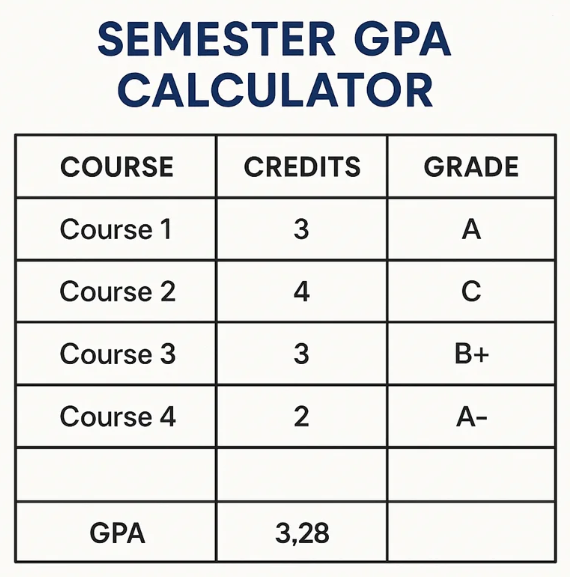
- Semester GPA: This is the average of your grades for a single term (e.g., Fall 2025). It reflects your performance during that specific window of time.
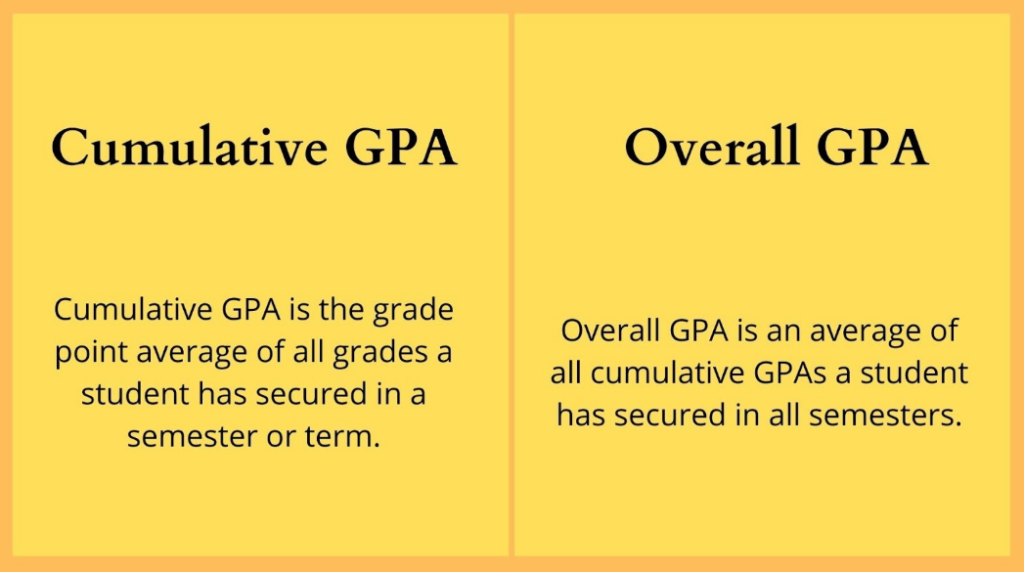
- Cumulative GPA: This is the average of all grades earned throughout your entire academic career at a specific institution. It factors in every credit hour you have ever attempted.
The Weighted vs. Unweighted Debate
In many high schools, GPAs are weighted, meaning Advanced Placement (AP) or International Baccalaureate (IB) courses are calculated on a 5.0scale, while standard courses use a 4.0 scale. Most universities, however, stick to an unweighted 4.0 scale, where an ‘A’ is always a 4.0, regardless of the course difficulty.
How a Semester-Based GPA Calculator Works
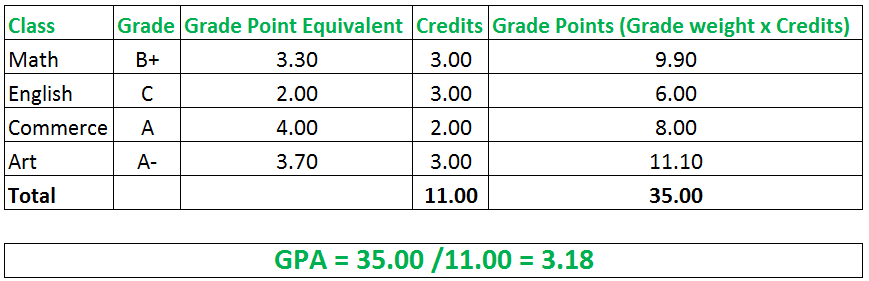
A cumulative GPA calculator doesn’t just add your semester averages together and divide by the number of semesters. That is a common mistake that leads to inaccurate results. Instead, it uses a weighted average based on credit hours.
The Mathematical Formula
To calculate your cumulative GPA manually, you use the following formula:
Step-by-Step Breakdown:
- Assign Point Values: Convert your letter grades to numerical values (e.g., A = 4, B = 3).
- Multiply by Credits: Multiply each course’s point value by the number of credits that course is worth. This gives you your Quality Points.
- Sum Everything: Add up all the quality points from all semesters.
- Divide: Divide the total quality points by the total number of attempted credit hours.
Common Problems Students Face with GPA Calculation
Even with a calculator, certain academic scenarios can complicate your numbers. Here are the most frequent hurdles:
1. The “Retake” Dilemma
If you fail a class and retake it, how is it calculated?
- Grade Replacement: Some institutions replace the old grade with the new one in the cumulative calculation.
- Grade Averaging: Other schools keep both grades on the transcript and average them together, which has a much smaller impact on raising your GPA.
2. Pass/Fail Courses
Courses taken as “Pass/Fail” or “Satisfactory/Unsatisfactory” usually do not impact your GPA. While you earn credits toward graduation, there are no “quality points” attached to them, so they are excluded from the GPA formula.
3. Transfer Credits
Often, when you transfer from a community college to a university, your credits transfer, but your GPA starts fresh. It is crucial to check your specific university’s policy on “Transfer GPA” versus “Institutional GPA.”
Requirements for Maintaining a Healthy GPA
A GPA is more than just a number; it is a gateway to opportunities. Depending on your goals, you will need to meet specific benchmarks:
- Good Standing: Most universities require a minimum of a 2.0 GPA to avoid academic probation.
- Scholarship Maintenance: Many merit-based scholarships require a 3.0 or 3.5 GPA to remain active.
- Graduate School Admissions: Competitive programs (Med School, Law School, etc.) often look for a cumulative GPA of 3.7 or higher.
- Honors Societies: Dean’s List or Latin Honors (Cum Laude, etc.) typically require a top 10–25% ranking in your class, often starting at 3.5.
Practical Example: Calculating Two Semesters
Imagine a student with the following record:
Semester 1:
- English (3 Credits): A (4.0) -> 12 Points
- Math (4 Credits): B (3.0) -> 12 Points
- History (3 Credits): B (3.0) -> 9 Points
- Total: 10 Credits, 33 Quality Points (GPA: 3.30)
Semester 2:
- Biology (4 Credits): A (4.0) -> 16 Points
- Art (2 Credits): A (4.0) -> 8 Points
- Physics (4 Credits): C (2.0) -> 8 Points
- Total: 10 Credits, 32 Quality Points (GPA: 3.20)
Cumulative Calculation:
Total Points (33 + 32 = 65) / Total Credits (10 + 10 = 20) = 3.25 Cumulative GPA.
FAQ: Frequently Asked Questions
Yes, but it is mathematically harder. The more credit hours you have already completed, the less impact a single semester of straight A’s will have on your cumulative total. This is why a calculator is vital for “GPA Projection.”
While a high GPA is impressive, employers also value internships, soft skills, and projects. However, for your first job or grad school, a high GPA acts as a powerful filter.
In many systems, an ‘A’ is 4.0, while an ‘A-‘ is 3.67 or 3.7. These small decimals can significantly change your cumulative score over four years.
You must first use your school’s conversion chart to turn percentages (e.g., 92%) into letter grades (A) or a 4.0 scale equivalent before using the calculator.
Final Thoughts for Students
Using a Cumulative GPA Calculator by Semester is about more than just looking at the past; it’s about planning for the future. By inputting “target grades,” you can see exactly what you need to achieve this semester to reach that elusive 3.5 or 4.0 by graduation. Stay organized, track your credits, and keep your eyes on the goal.