The campus library at 2 p.m. on a Tuesday sounds like a food court. Group projects argue two tables over. Someone’s headphones leak bass through the wall. A vending machine hums next to the only open outlet. None of this is dramatic, but for a lot of students it’s enough to turn a 45-minute reading assignment into a two-hour ordeal.
A low-sensory study spot is simply a space with reduced noise, light, movement, and unpredictable interruptions. For students with ADHD, autism, anxiety, or sensory processing sensitivities, this isn’t a preference. It’s the difference between retaining material and rereading the same paragraph five times. Even students without a diagnosed condition often study better in lower-stimulation environments, since the brain has fewer competing inputs to filter out.
This guide covers where to look on a typical campus, what to check before settling in, and how to build a sensory-friendly study habit that actually sticks.
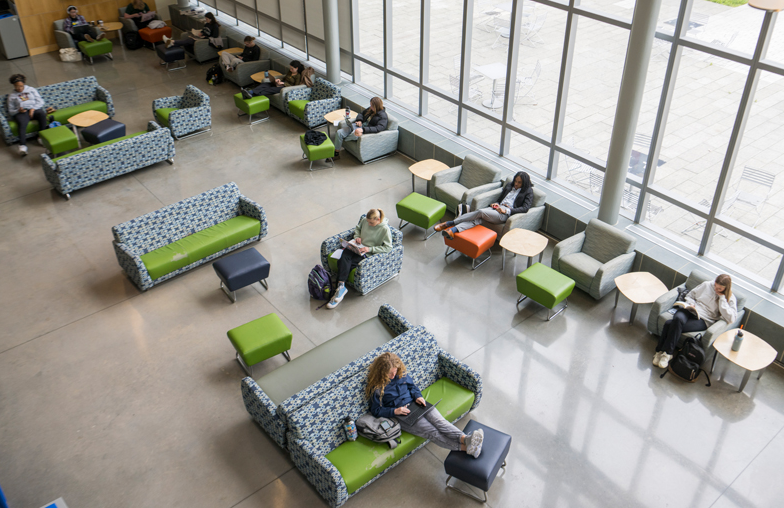
What Makes a Space Low-Sensory
Before scouting locations, it helps to know what to look for. The main variables are:
Sound. Constant background noise (HVAC hum, distant traffic) is usually easier to tolerate than intermittent noise (conversation, phone notifications, doors slamming). Look for spaces with soft surfaces like carpet and upholstered furniture, which absorb sound better than tile and glass.
Light. Fluorescent overhead lighting flickers at a frequency some people can consciously perceive, and it’s a common trigger for headaches and eye strain during long study sessions. Natural light or warm, adjustable lamps are easier on the nervous system.
Foot traffic. A room near a main hallway or stairwell gets interrupted constantly, even if nobody enters. Spaces at the end of a corridor or on an upper floor tend to stay calmer.
Predictability. A spot that’s quiet at 9 a.m. and packed by noon isn’t reliable. The best low-sensory spots stay consistent throughout the day, which matters if you’re trying to build a routine around a specific location.
Where to Look on Most Campuses
Library quiet floors and silent study rooms
Most university libraries have at least one floor designated as silent study, separate from the collaborative or group-work floors. These usually enforce no talking, no phone calls, and sometimes no food. If your library has bookable individual study rooms, those tend to be even quieter, since you control who’s in the room.
Check your library’s website or front desk for floor maps. Many schools post real-time occupancy data through an app, which helps you avoid walking up three flights only to find the floor full.
Disability services and accessible study lounges
A lot of students don’t realize their campus disability or accessibility services office often maintains a separate, low-traffic study lounge, sometimes with dimmable lighting and noise-cancelling headphones available to borrow. You don’t always need a formal diagnosis to use these spaces. Policies vary by school, so it’s worth a quick email or visit to ask.
Empty classrooms between class blocks
Academic buildings often have classrooms sitting empty for an hour or two between scheduled classes. Checking your registrar’s public room schedule (most schools post this online) lets you find a guaranteed-empty room at a predictable time each week. This is one of the more underused options, mainly because students don’t think to look.
Graduate or department lounges
If you’re a grad student, or even an undergrad working closely with a department, departmental lounges and reading rooms are usually far quieter than general-use buildings. Ask a professor or department admin whether undergraduates can use the space during off-peak hours.
Outdoor spots with natural sound buffering
Not every low-sensory space is indoors. A bench under tree cover, a courtyard with running water, or a quiet edge of a quad can mask unpredictable noise with consistent ambient sound (wind, water, leaves) instead of eliminating sound altogether. This works well for people who find total silence uncomfortable but still need to avoid sudden noise.
Practice rooms and study carrels
Music building practice rooms are soundproofed by design and frequently sit empty outside of peak rehearsal hours. Similarly, individual study carrels tucked into the stacks (rather than open study tables) give you walls on three sides, which cuts down on peripheral movement.
Building a Sensory-Friendly Study Routine
Finding the right room is only half the work. A few habits make any space more manageable:
- Scout at the time you’ll actually study. A room that’s silent at 8 a.m. might be a different story at 3 p.m. Visit during your real study window before committing to it.
- Bring your own buffer. Noise-cancelling headphones, a brown-noise track, or earplugs give you a backup if the space changes unexpectedly.
- Control the light yourself. A small desk lamp lets you avoid overhead fluorescents even in shared spaces.
- Time-block instead of open-ending. Knowing you only need 50 focused minutes makes a borderline space more tolerable than walking in with no end point.
- Track your study output, not just hours. Sitting in a quiet room doesn’t help if you’re not sure whether the work is paying off. After a focused session, it’s worth checking your current standing in a course with a grade calculator, especially mid-semester when you’re deciding whether a course needs more attention.
Connecting Focus Time to Your Actual Numbers
Quiet study time matters most when it’s pointed at the right goal. If you’re heading into finals and trying to figure out exactly what score you need on a final exam to hit a target grade, a final grade calculator takes the guesswork out of it; enter your current grade and the exam’s weight, and you get the exact number to aim for instead of a vague sense of “I should probably study more.”
For students tracking GPA across a full semester or comparing how a tough course affects their overall standing, a college GPA calculator does the credit-weighted math correctly, which a quick mental average usually gets wrong. Knowing the real number helps decide whether a low-sensory study block should go toward the class that’s struggling or the one that’s already stable.
If your low-sensory routine includes long reading sessions, particularly for research papers or dense textbook chapters, the GPA Calculator blog also has a guide on how to read academic papers fast without missing what matters, which pairs well with a quiet, distraction-free room.
A Note on Advocating for These Spaces
If your campus doesn’t have an obvious low-sensory option, that’s worth raising with student government, your library’s suggestion box, or disability services directly. A surprising number of “quiet floor” policies exist on paper but aren’t enforced, and a few complaints from students can be what gets a librarian to actually post and patrol the rule. You’re not asking for a special favor. You’re asking for a space that lets you do the work you’re already paying tuition for.
Frequently Asked Questions
Do I need a disability diagnosis to use accessible study spaces? Not always. Many campus accessibility lounges are open to any student who finds them helpful, though policies differ by school. Check directly with your disability services office.
What’s the quietest time to study in a college library? Early morning (before 9 a.m.) and late evening (after 9 p.m.) tend to be the least crowded windows, though this varies by school and exam period.
Are study pods or single carrels better than open tables for sensory sensitivity? Generally yes. Carrels with walls on at least two sides reduce peripheral visual movement and give a small acoustic buffer compared to open tables.
Can headphones replace a quiet room entirely? For some people, yes, especially with noise-cancelling models and a consistent background track. Others still need reduced light and foot traffic, which headphones can’t fix on their own.